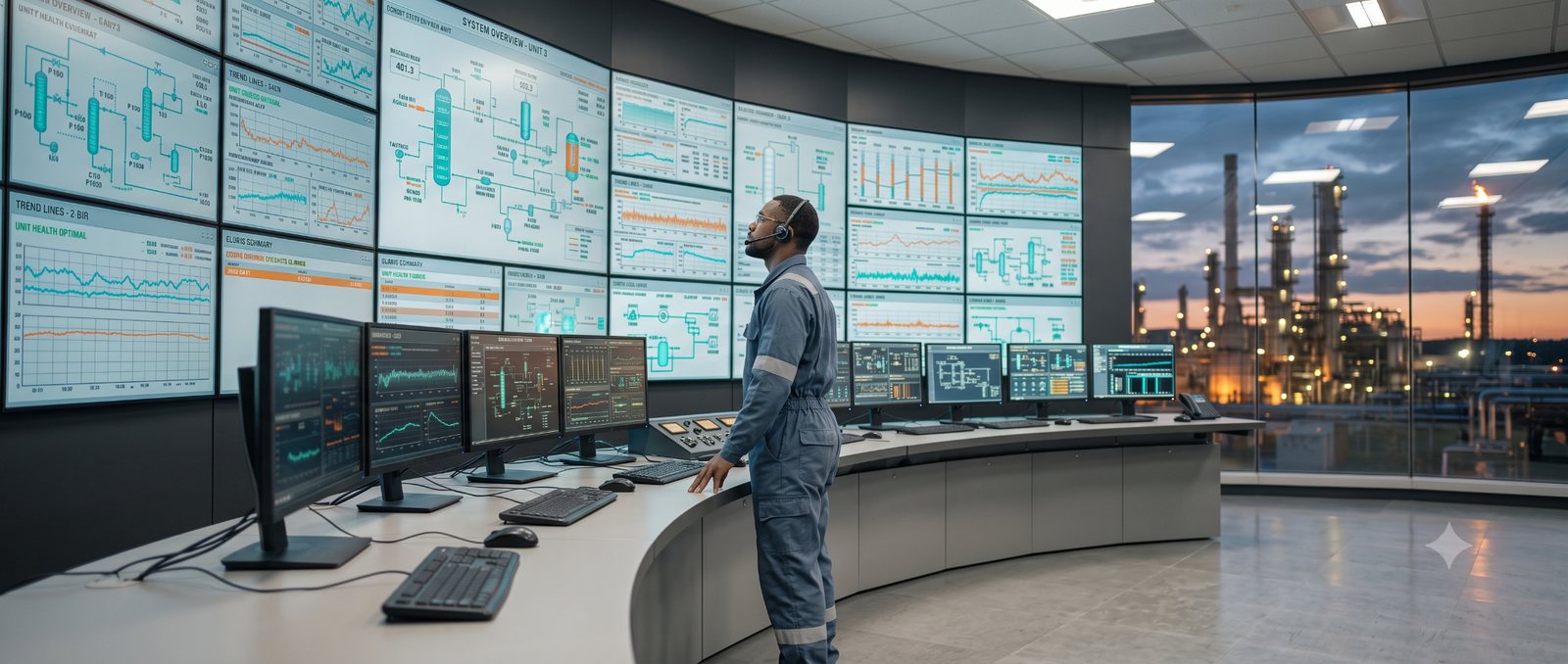
The coffee you drank this morning passed through at least four automated plants before it reached your cup. The water was treated in a facility run by a SCADA system. The milk moved through a dairy where PID loops held pasteurisation temperature within half a degree. The beans were roasted under a recipe executed by a PLC. The cup itself came off a forming machine cycling faster than you can blink. None of it needed a human touching a valve.
That's industrial automation: the discipline of making plants and machines run themselves — safely, repeatably, and at a quality no human crew could sustain over a 24-hour shift pattern. It is quietly one of the largest engineering fields on the planet, and right now it's going through its biggest shake-up since the PLC replaced relay cabinets in the 1970s.
The pyramid every engineer learns on day one
For forty years, the industry has organised itself around one picture: the ISA-95 automation pyramid. At the bottom sit the field devices — the sensors and valves that touch the process. Above them, controllers make decisions every few milliseconds. Above those, SCADA and HMI screens let operators supervise. Then come the operations systems (MES, historians), and finally the enterprise layer where ERP and planning live.
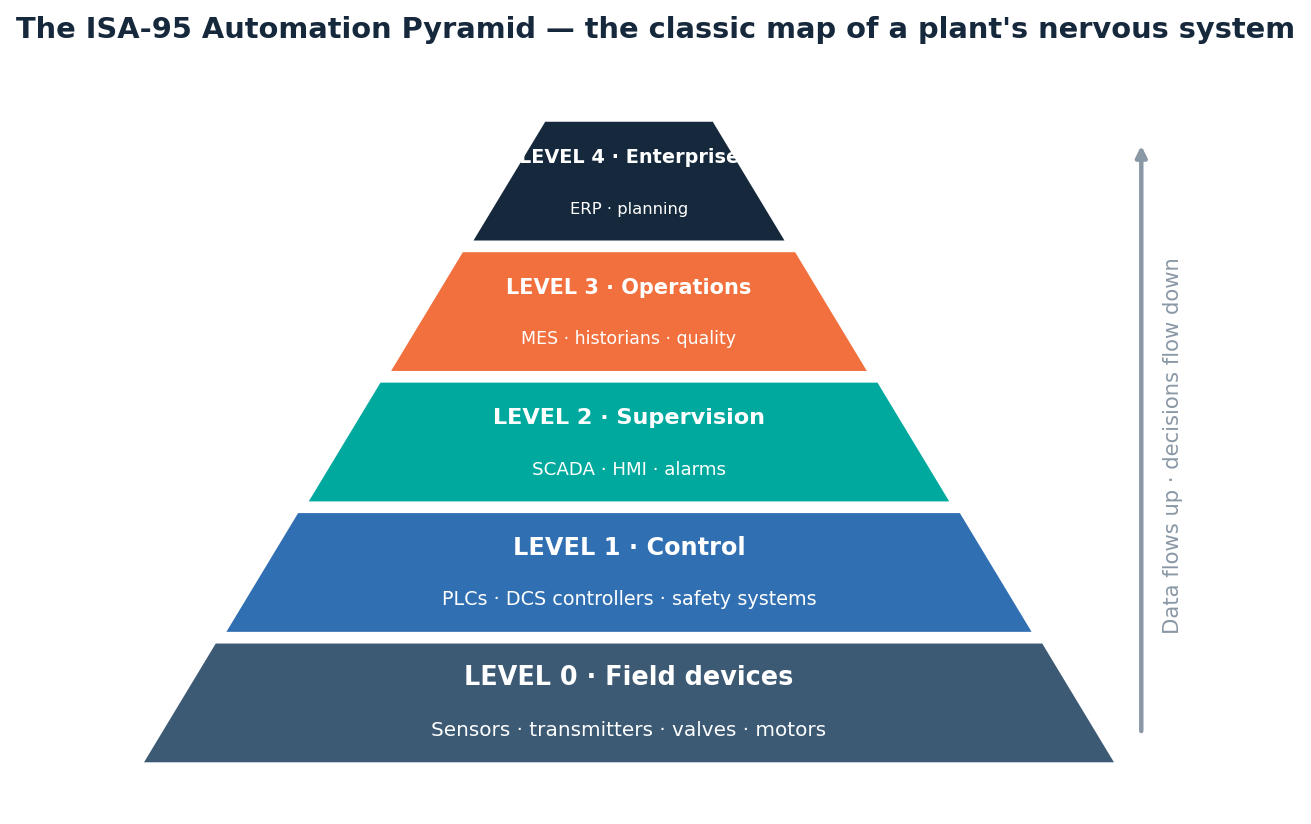
The pyramid is a genuinely useful mental model. It tells you where a problem lives. Valve hunting? Level 0 or 1. Operators blind to an alarm? Level 2. Production numbers not matching what accounting sees? That's a Level 3-to-4 integration headache. When a graduate engineer can place a problem on the pyramid within thirty seconds, plant managers notice.
Why this field, why now
Three forces are colliding, and together they make this the most interesting time to enter the profession in decades.
- The workforce cliff. A large share of the engineers who built today's plants are retiring, and companies openly admit they can't replace them fast enough. Deloitte's skills-gap work projects millions of unfilled manufacturing roles by 2030. Scarcity is leverage — for you.
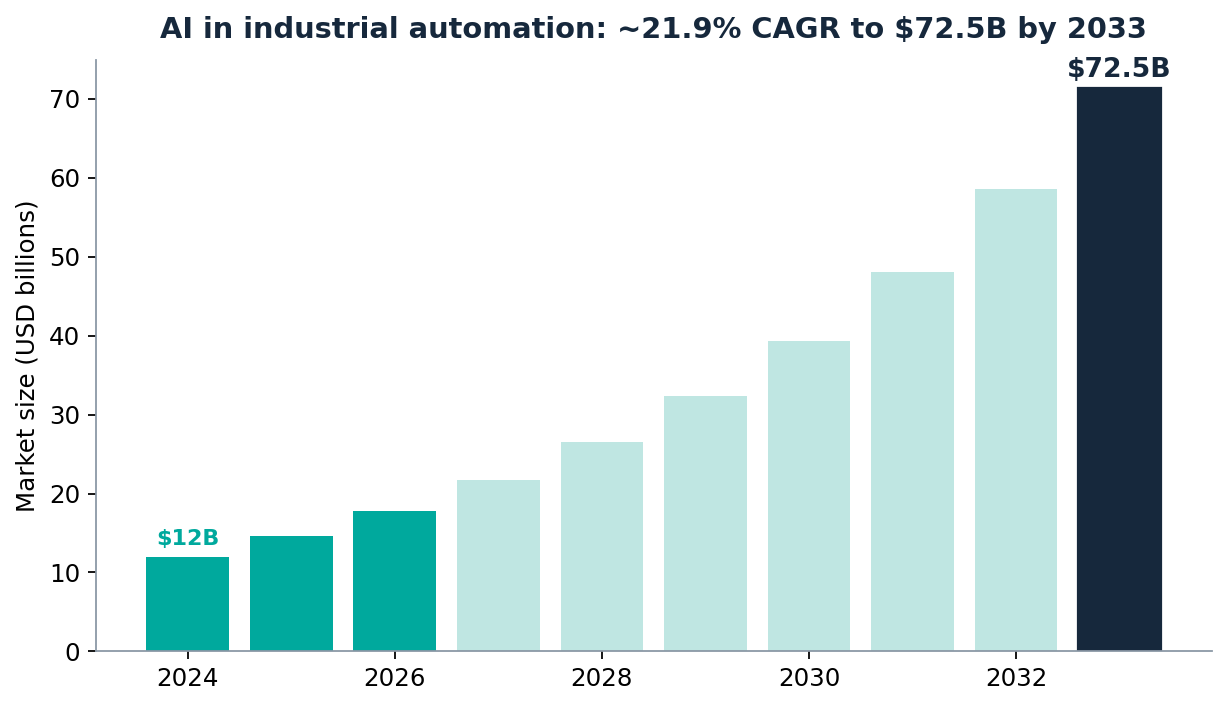
- The AI wave has reached the plant floor. In a single year, adoption of agentic AI in manufacturing jumped from 6% to 24%. The market for AI in industrial automation is heading toward $72.5 billion by 2033. This isn't a lab curiosity anymore; it's showing up in control rooms.
- The old architecture is cracking. Virtual PLCs, unified namespaces, and software-defined factories are dissolving the neat layers of the pyramid. The engineers who understand both the classic model and what's replacing it will translate between two worlds — and translators are always in demand.
What this series will do
Over the next eleven articles we'll go from a 4–20 mA loop all the way to plants that tune themselves. The first half builds the foundations properly — instruments, controllers, PID, networks — because no amount of AI rescues a plant with badly tuned loops and dirty data. The second half covers what's genuinely new: unified namespace, digital twins, industrial AI, agentic systems, autonomous operations, and OT cybersecurity. We'll close with a career map for the whole journey.
If you're a final-year student, this series is the bridge between your control theory module and your first day on site. If you've been tuning loops for fifteen years, stay for the second half — some of it will change how you think about your own plant.
Key takeaways
- Industrial automation makes processes run safely and repeatably without constant human intervention — it touches almost everything you consume.
- The ISA-95 pyramid (field → control → supervision → operations → enterprise) is still the fastest way to locate any plant problem.
- A retirement wave, an AI adoption surge (6% → 24% in one year), and a new software-defined architecture make this the best entry window in decades.
What’s your take?
Agree, disagree, or got a war story from your own plant? Join the conversation — I read and reply to every one.
A 12-part journey from the sensor to the self-driving plant.
Each week, one article — building from the 4–20 mA loop all the way to plants that run themselves. Written for students stepping onto site and engineers who've been on the floor for years. Brought to you by SynapseAI.
▦ See the full 12-part roadmap →
Building or running industrial automation?
See how SynapseAI helps vendors win markets and plant teams work smarter.